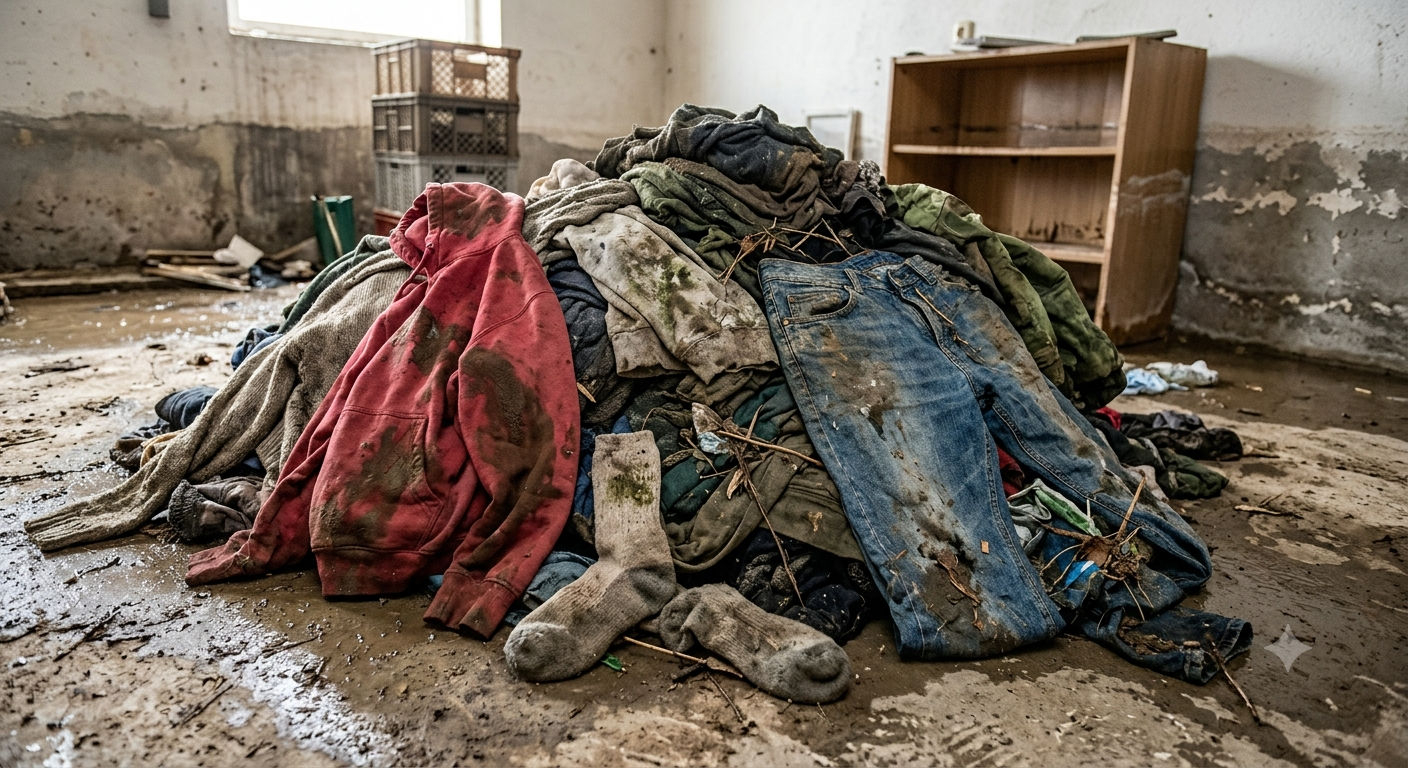
Garments Pulled From Standing Water
Water & Flood Damage Fabric Reclamation in Gaylord for textiles exposed to Category 1, Category 2, and Category 3 water contamination
Standing water from burst pipes, roof leaks, or spring flooding in Northern Michigan does not affect all fabrics equally—the contamination category determines whether textiles can be safely restored or must be discarded. Within the first 24 to 48 hours, bacterial growth accelerates, dye bleeding intensifies, and fiber swelling leads to permanent shape distortion if wet textiles remain untreated. Great Lakes Textile Restoration & Laundry Service LCC categorizes water damage by contamination source: Category 1 involves clean water from supply lines, Category 2 includes gray water from appliances or roof runoff, and Category 3 refers to black water containing sewage or environmental contaminants.
Professional cleaning, sanitization, drying, and fabric stabilization procedures vary by contamination category, with Category 3 exposure requiring complete antimicrobial treatment and verification before textiles are considered safe for reuse. Prompt extraction prevents mildew odors, color transfer between garments, and the permanent creasing that develops when fabrics dry while bunched or folded under pressure.
Contact us immediately for emergency textile recovery to begin treatment before bacterial growth and fiber degradation become irreversible.
How Fast Treatment Prevents Permanent Damage
Restoration begins with contamination assessment and immediate extraction to halt bacterial growth, followed by controlled washing cycles calibrated to water category and fabric type. Category 1 exposure requires standard cleaning with accelerated drying, while Category 2 and Category 3 contamination demand antimicrobial sanitization, temperature-controlled processing, and verification testing to confirm safe reuse standards are met.
You will notice that fabrics no longer carry musty odors, colors remain separated without dye transfer, and garments retain their original shape rather than the stretched or shrunken distortion that occurs when wet textiles dry without stabilization. Items treated within 48 hours of exposure show significantly better recovery rates than those left wet for extended periods, particularly in cases involving dye-rich fabrics or delicate weaves prone to distortion.
Not all water-damaged textiles respond to restoration—heavily soiled Category 3 exposure, items with advanced mildew colonization, or garments that dried while compressed may be documented as total losses. Restoration also excludes items with permanent dye bleeding or structural damage from prolonged submersion, which are photographed and reported for insurance documentation purposes.
Answers to Frequent Fabric Recovery Questions
Residential and commercial property owners across Northern Michigan often need clarity on safe reuse standards and contamination categories after water intrusion events.
What is the difference between Category 1, Category 2, and Category 3 water damage?
Category 1 involves clean water from supply lines, Category 2 includes gray water from appliances or roof drainage, and Category 3 refers to black water containing sewage or environmental contaminants, each requiring different sanitization protocols.
Why does the 24 to 48 hour window matter for wet textiles?
Bacterial growth accelerates, dye bleeding intensifies, and fiber swelling leads to permanent shape distortion when wet fabrics remain untreated beyond this timeframe.
Can flood-exposed clothing be safely reused after professional processing?
Yes, when treated according to contamination category with appropriate antimicrobial sanitization and verification testing to confirm safe reuse standards.
How are wet textiles handled during insurance restoration projects in Gaylord?
Items are bagged, inventoried with photographic documentation, transported to climate-controlled facilities, and processed according to water category with detailed records for adjuster review.
What happens if textiles dried before treatment could begin?
Garments that dried while compressed or bunched often develop permanent creasing, mildew odors, and shape distortion that cannot be reversed, requiring documentation as total losses for insurance claims.
Great Lakes Textile Restoration & Laundry Service LCC supports residential, commercial, and insurance restoration projects throughout Northern Michigan with contamination-specific processing protocols. Begin emergency textile recovery now to prevent bacterial growth and permanent fiber damage from progressing beyond salvage thresholds.